

by Dr. Andrew Seaton (University of Manchester)
The two-day workshop “Modern British History and the ‘Environmental Turn’” took place at Lincoln College, Oxford on 16 and 17 September 2026. This event brought together over 40 scholars from a range of career stages and academic specialisms to consider the impact of new environmental approaches on the historiography of modern Britain. I co-organised the workshop with Dr Max Long (Oxford). After advertising the event through social media, mailing lists, and academic networks, we were amazed by the response – receiving more than double the number of applications than we could accommodate. We are thankful to everyone who applied and see this level of interest as a healthy sign of broader engagement with environmental approaches and topics within British history.
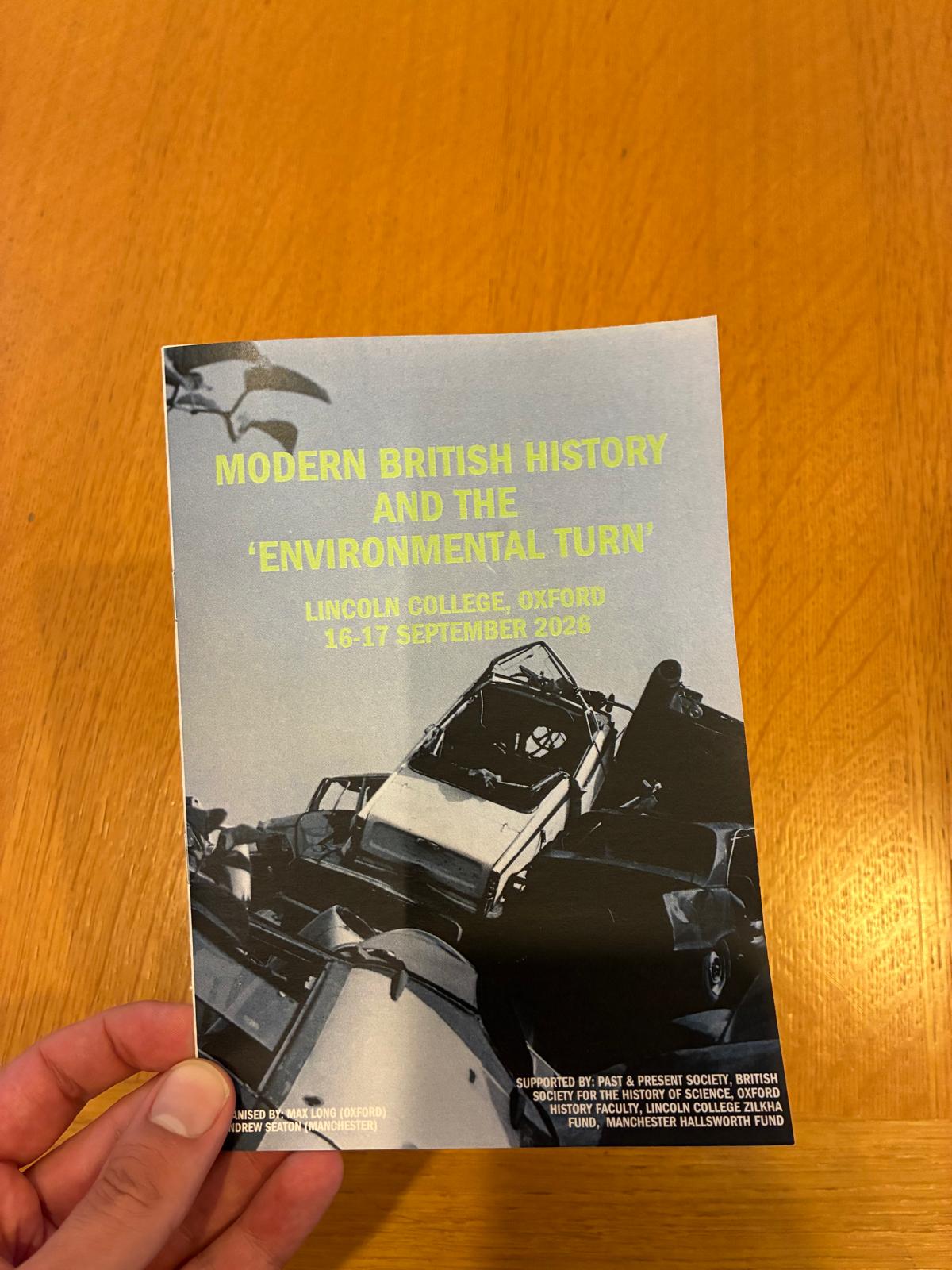
Programme for “Modern British History and the ‘Environmental Turn’”, image supplied by the event organisers, all rights reserved the respective holders (2026)
Our call for papers invited participants to consider how an environmental lens might reshape established narratives in the history of Britain and the World, as well as shaping new research agendas and methodologies. We suggested in an opening provocation that a recent uptick in interest in environmental history in the leading conferences, journals, and textbooks in modern British history suggested a ‘turn’ in the field. Although we were open to critiques of ‘turns’ as an organising framework, it remained a useful idea to work with for this event.
17 of our participants were invited to write short ‘position papers’ which were pre-circulated among all attendees and then summarised through short presentations. This format worked well in terms of providing participants with a short piece of writing they could engage with before they arrived while also offering the opportunity to be reminded of the main points verbally at the event itself.
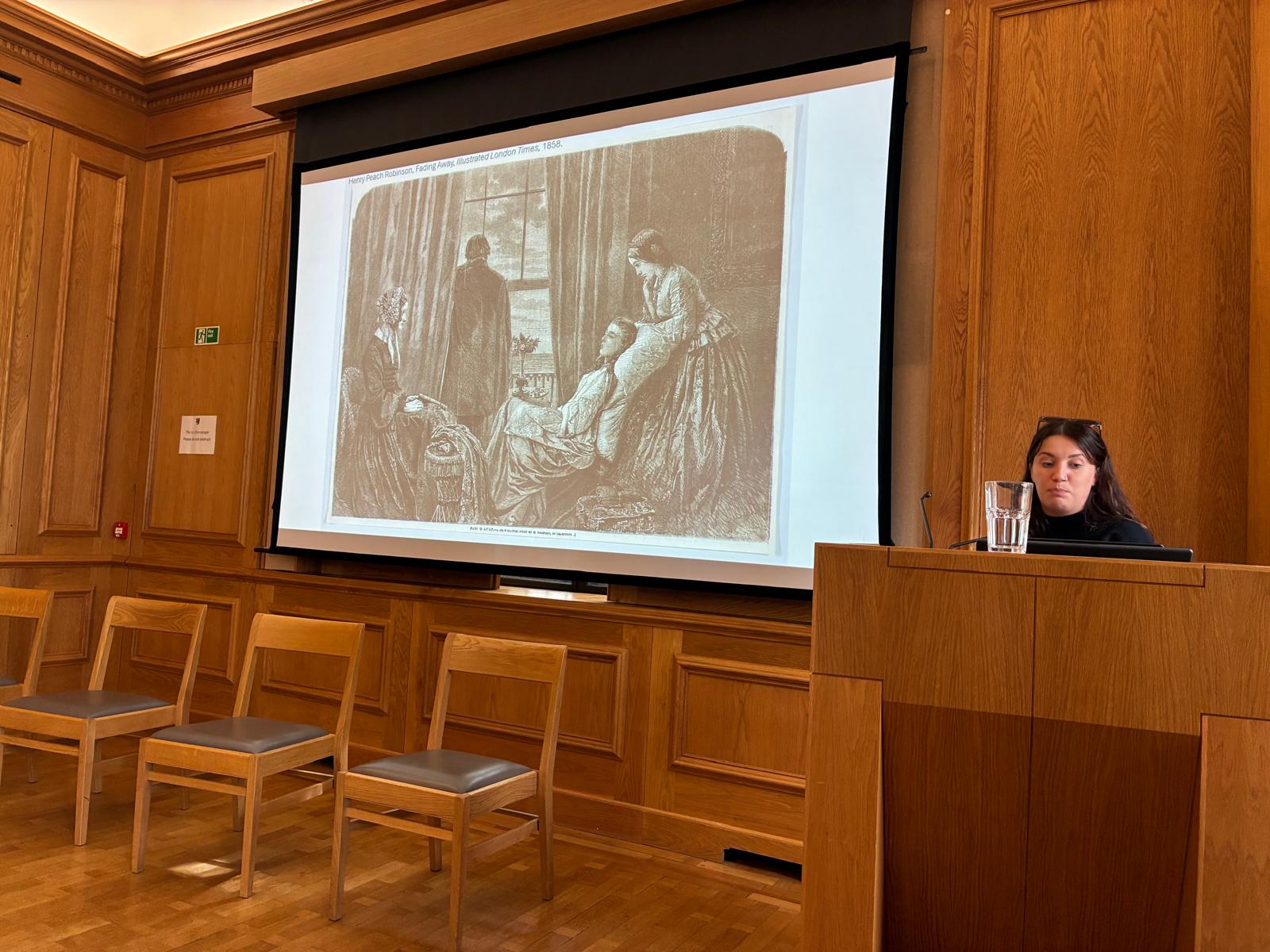
Dr. Lena Ferriday, speaking on the ‘Landscape Experiences’ panel, image supplied by the event organisers, all rights reserved the respective holders (2026)
We arranged the two-day programme around six thematic panels, which were 1) Energy and Industry, 2) Landscape Experiences, 3) Empire and Resources, 4) Science, Systems and the Non-Human, 5) Activism, Politics, and Environmentalism, 6) Urban Histories. We also had two roundtables (on Research and Teaching, respectively). All the papers and roundtables stimulated fantastic conversation in the Q&A sections. We are grateful to the Past and Present Society (alongside our co-funders, the British Society for the History of Science, Oxford History Faculty, Lincoln College Zilkha Fund, and the University of Manchester Hallsworth Fund) for their financial support which allowed us to cover the venue and catering costs, a workshop meal, and to provide assistance to scholars without access to other research funds.
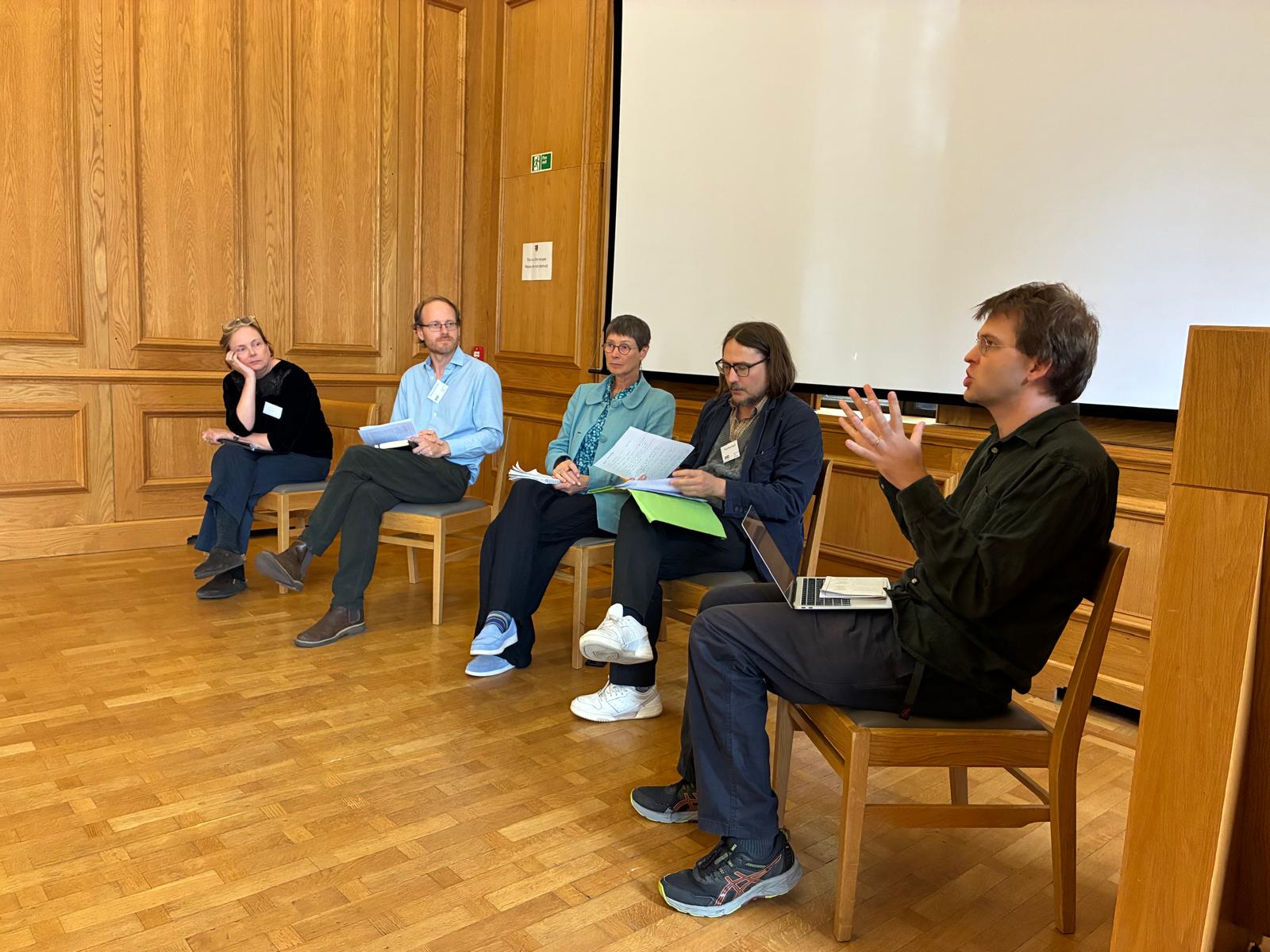
(From right to left), Dr. Max Long, Dr. Paul Merchant, Dr. Sally Horrocks, Dr. David Kennerley, and Dr. Caitríona Beaumont, speaking on the ‘Activism, Politics, Environmentalism’ panel, image supplied by the event organisers, all rights reserved the respective holders (2026)
Our wide-ranging conversations included grappling with the following points and questions. First, what is the relationship between prior landscape or rural histories in modern British history and ‘environmental history’? While most participants seemed comfortable to embrace the latter, there were careful suggestions about respecting the distinctiveness of the former and making sure they are included as part of any forward movement. Second, the relationship between larger historical structures and agency was a recurring refrain of conversation. Our participants asked how individual life stories, bodily experiences, and objects or technologies might be kept in view while narrating sweeping macro trends (that include ecological change or economic shifts). Relatedly, we spent time considering periodisation in modern British history – helped by an equal spread of nineteenth-century and twentieth-century papers. Third, it was wonderful to hear about how environmental history enabled participants to write British history from different perspectives and beyond national borders. Our participants gave us new histories told with trees at their centre or fascinating accounts that began with infrastructure networks out in the empire, before working their way back to the metropole.
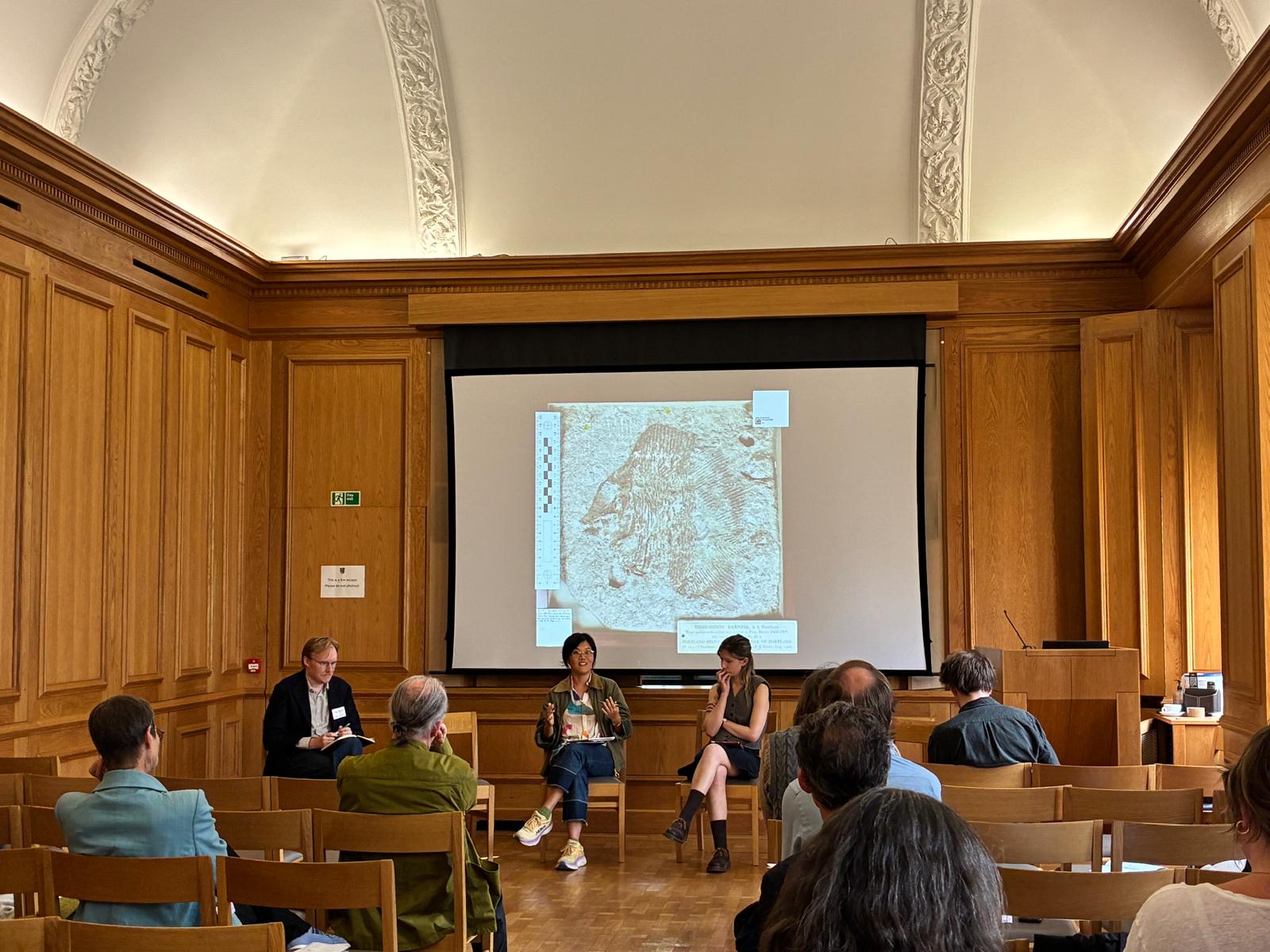
Dr. Pollyanna Rhee (speaking) and Dr. Holly Smith, speaking on the ‘Urban Histories’ panel, image supplied by the event organisers, all rights reserved the respective holders (2026)
Given the success of this two‑day workshop and the growing scholarly interest in British environmental history, we are pursuing a published roundtable. Our goal is to provide an ambitious account of where environmental approaches stand in the field and to suggest new historiographical directions. Thanks again to the Past and Present Society for making this event possible.