

by Dr. Olivia Formby (Emmanuel College, University of Cambridge)
Rational speech was hailed by early modern Europeans as the clearest outward sign of reason: the capacity that set humans above all other animals. Yet speechlessness was a common part of early modern life. All human infants were born without speech and, throughout the life cycle, speech could be impeded or even silenced, temporarily or permanently. ‘Speech/less in the Early Modern World’ research workshop (23-24 April 2026) aimed to interrogate the ways that the articulation of rational speech continues to be privileged by modern scholars as the best evidence for humanness, reason, and even emotion.
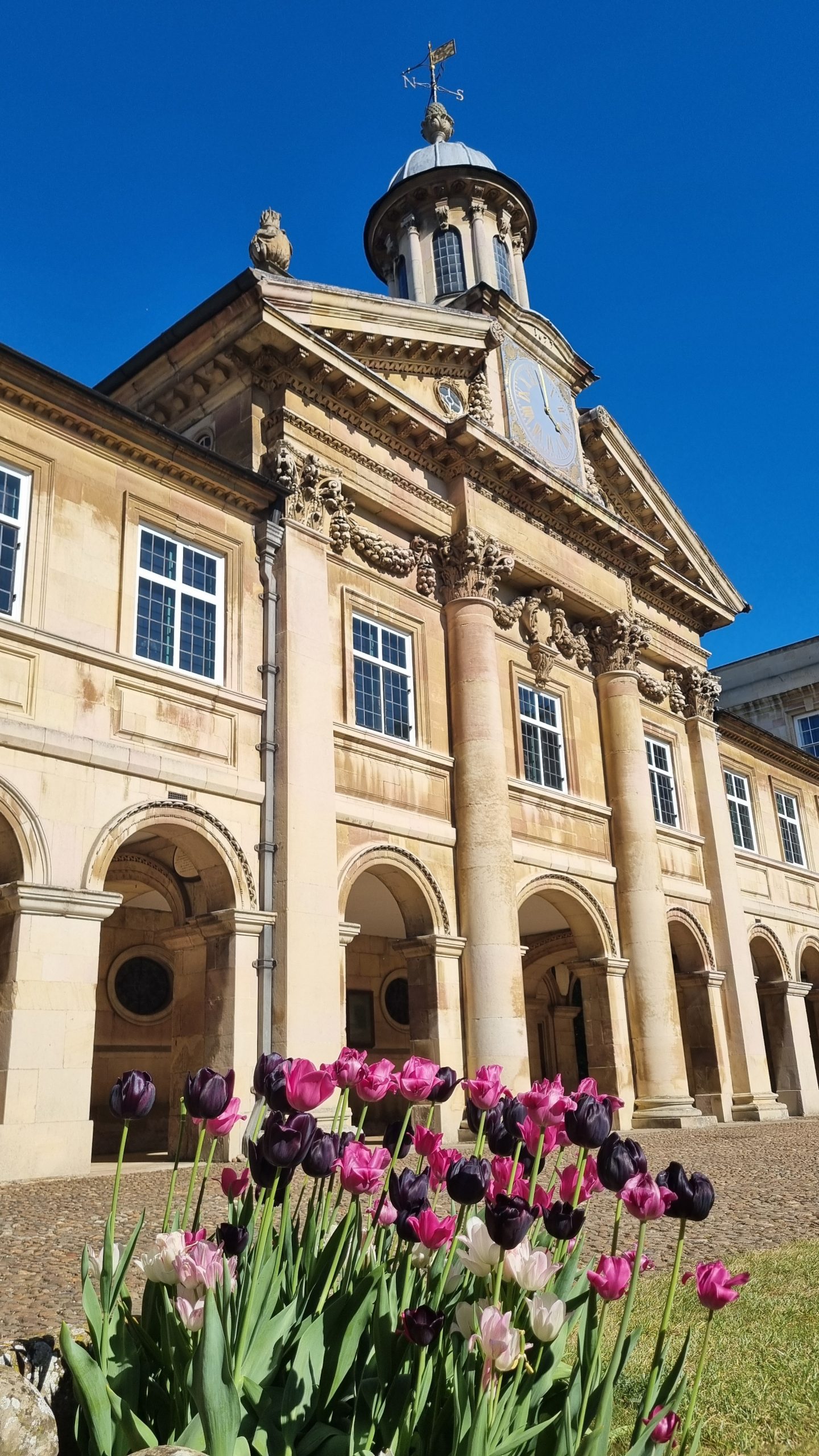
Photograph of the front of Emmanuel College, Cambridge, by Olivia Formby, all rights reserved (2026)
We gathered at Emmanuel College, University of Cambridge, to share new research that explores the multiple meanings and diverse lived experiences of speechlessness in the early modern world (c.1450-1830). Contributors and chairs were drawn from all career stages and represented institutions across the UK, Europe, Canada, and Australia. Spurred on by gorgeous spring weather, the workshop was a convivial environment for interdisciplinary discussion about voice, the body, and personhood in early modernity.
Across six panels, we explored how people of the past experienced varying degrees of speechlessness due to illness or disability, enslavement, migration, spiritual events, or dramatic performance. These early modern experiences were often difficult and even distressing. Lack of articulate speech generated ambiguity, both in the meanings which an individual could convey to others, and in the status of speechless people in their communities. Speech was often most critical at moments in early modern life when religious and legal personhood was at stake, such as when deaf children approached the sacrament of confirmation or a dying man lost his speech before the making of his will. Yet contributors were also attentive to the nuances of these ambiguous experiences and highlighted the ways that speechlessness was effectively navigated by individuals, families, and communities. People without speech – from young slaves to the prelingually deaf to the bewitched – often employed alternative written, sounded, and gesture-based means of communication, with purpose and agency.
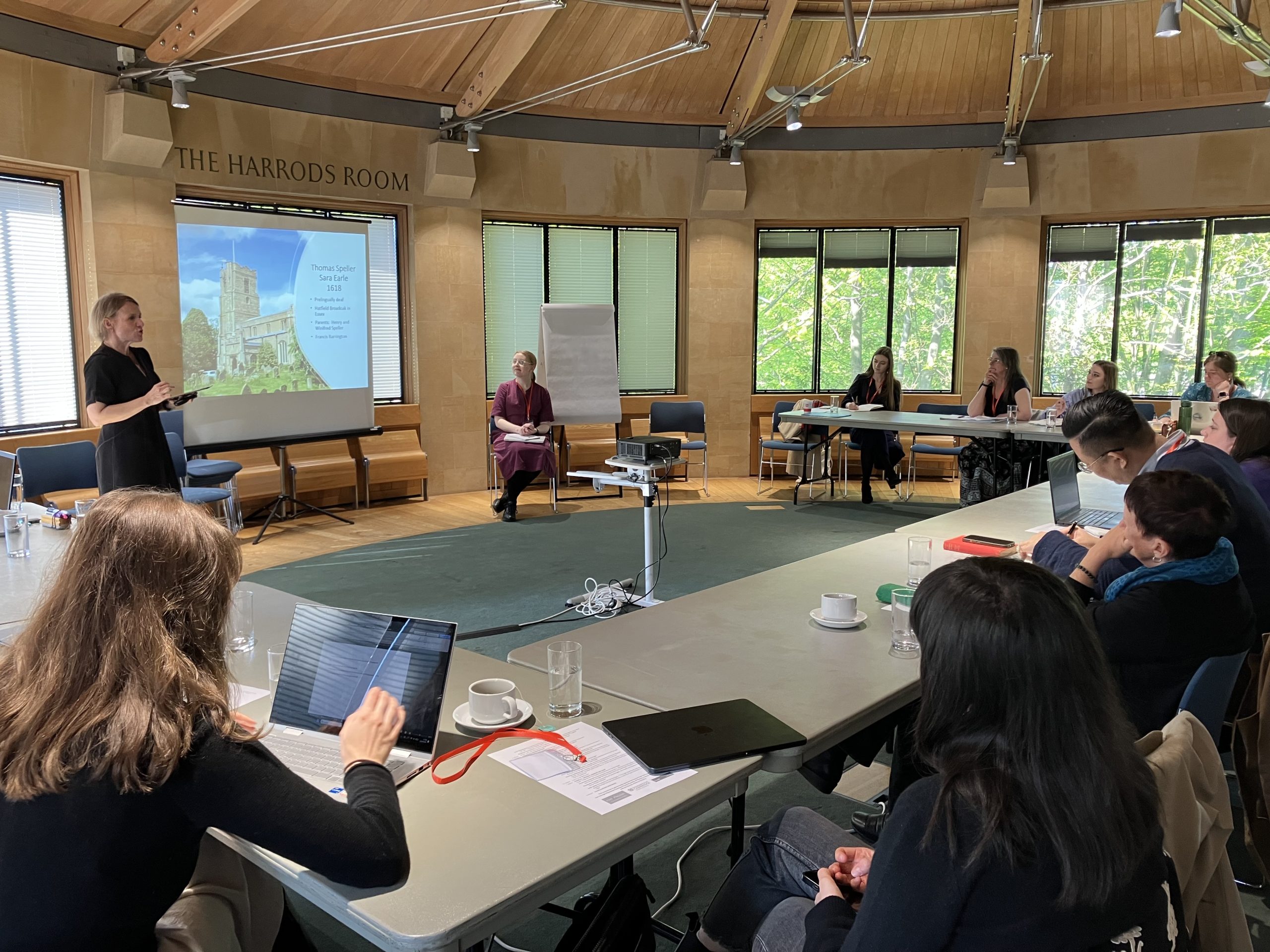
Photograph of a session during “Speech/less” on 23-24 April 2026, by Mary Whittingdale, all rights reserved (2026)
A common thread throughout the papers was the dynamic relationship between speech and the body. Early modern people looked to the speechless body for signs of reason and understanding, and for clues about whether speech might be restored. Our discussion of the changeability and ageing of the body revealed that speechlessness was not at all clear cut. Speech could sometimes return, by miraculous or ordinary means. A person could be deemed speechless in a medical context, even when they could produce certain word sounds. In a legal context, a non-speaking deaf person could be declared fit for marriage, as long as their gestures indicated their capacity for understanding. The interpretation of non-verbal gestures and sounds was highly dependent on the relationships and settings in which speechlessness was expressed.
Professor Rosamund Oates (Manchester Metropolitan University) delivered a magnificent keynote on ‘Silent Histories: Deafness, Speech and Consent in Early Modern England’. Professor Oates expertly drew out these issues of speechlessness and personhood, gesture and the body, using vivid examples of the lived experiences of deafness drawn from her groundbreaking work on deafness in early modern England. This was an especially fruitful keynote given the number of young scholars in the room also working on deafness and other disabilities.
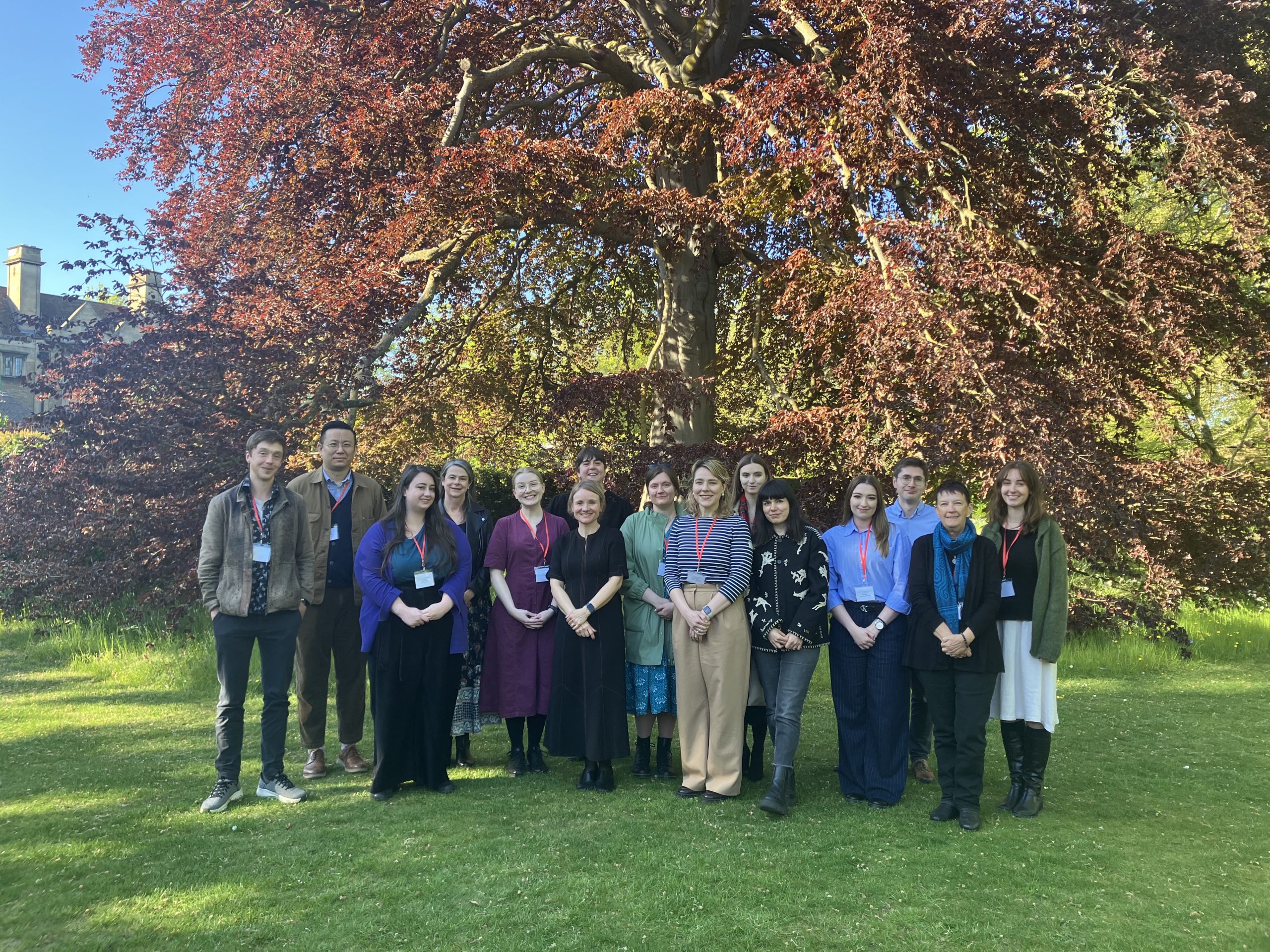
Photograph of a group of attendees at “Speech/less” on 23-24 April 2026, by Mary Whittingdale, all rights reserved (2026)
‘Speech/less in the Early Modern World’ sets early modern histories of the lifecycle, religion, and emotion in new directions, by revealing how speechlessness tested the limits of early modern thinking about what it meant to be a person in one’s community and by finding such limits to be very malleable indeed. The organiser is pursuing avenues for publication of an edited collection of essays.
I thank the Past and Present Society for their generous funding of this research workshop (along with co-funders, the Social History Society and the Faculty of History, Cambridge), which made it possible to fund travel bursaries for postgraduate and early career researchers and to allow free registration.
Past & Present logo, 2017 all rights reserved