

by Dr. Yeliz Teber (Wolfson College, University of Oxford)
The Kizilbash/Alevism-Bektashism Symposium: New Corpora, Databases, and Digital Tools in Ottoman and Contemporary Contexts, generously supported by the Past & Present Society, was held successfully at Wolfson College, University of Oxford, on 22 May 2026. Convened by Dr. Yeliz Teber, Leverhulme Trust Early Career Fellow in Asian and Middle Eastern Studies, the symposium brought together established and emerging scholars working on the history, culture, religion, and heritage of Kizilbash/Alevi-Bektashi communities, who constitute the largest religious minority in today’s Sunni-majority Turkey. As the first event of its kind dedicated specifically to digitally engaged approaches to Kizilbash/Alevi-Bektashi studies, the symposium provided a unique platform for scholarly exchange on new methodologies, sources, and research questions within this rapidly expanding field.
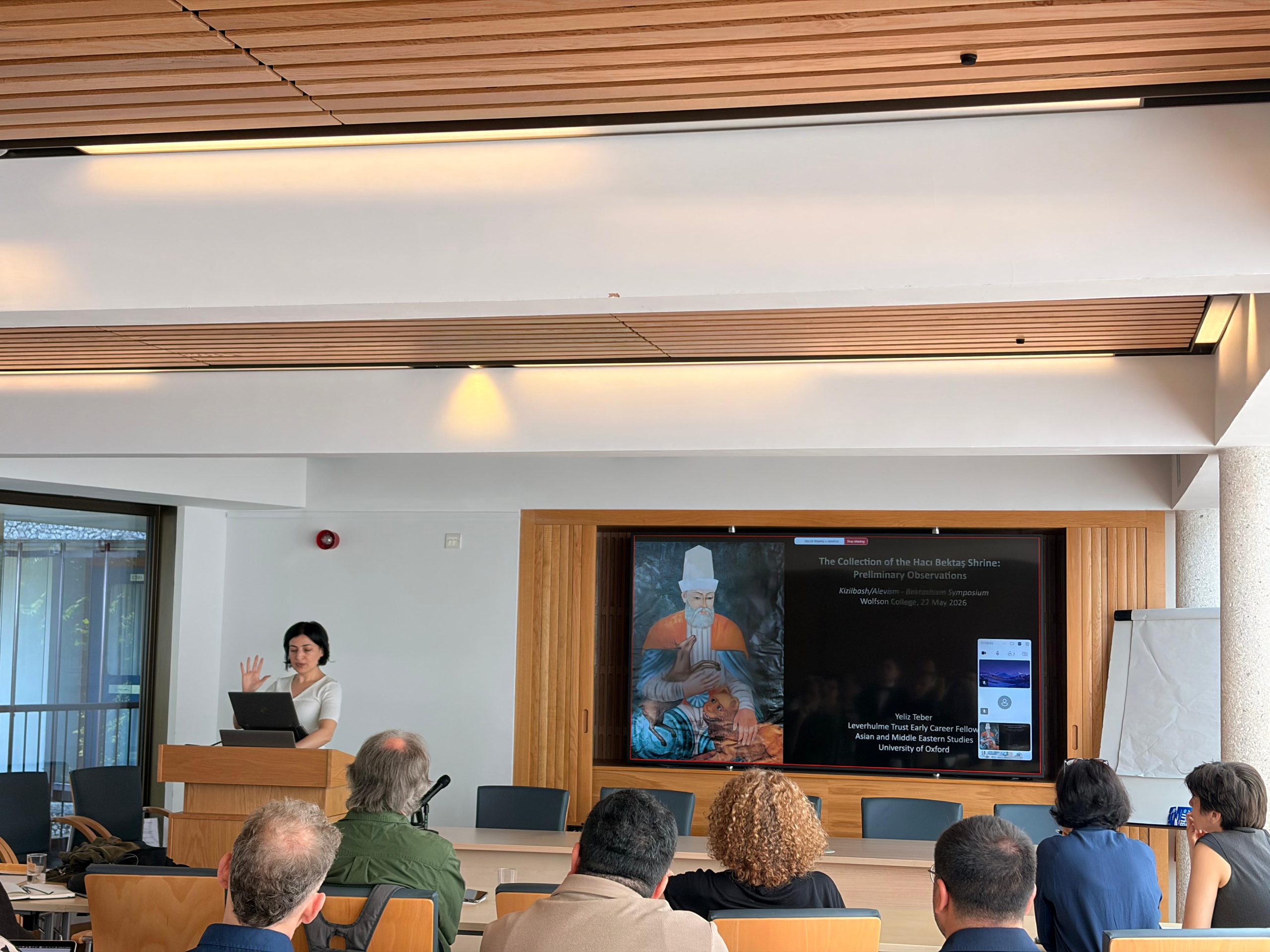
Event photograph, attributable to Hüsamettin Şimşir, Daniel Burt, Yeliz Teber, and Bedriye Poyraz, all rights reserved the respective holder (2026)
The symposium featured nine research papers presented by scholars from the UK and abroad, exploring a wide range of themes and long-standing questions in the field. In the morning panel, Mark Soileau advanced a novel methodological approach to the study of the hagiography of Hacı Bektaşi, a major text narrating the life and legends of the patron-saint of the Bektashi Sufi order, by drawing on a corpus of 103 manuscripts. Soileau demonstrated how the tracing of textual and paratextual features across manuscript networks can reveal complex patterns of transmission, continuity, and transformation beyond conventional models. Yeliz Teber introduced the first systematic study of the Hacı Bektaş shrine collection, highlighting the significance of documenting and analysing this largely unexplored corpus of manuscripts, paintings, and objects through a database to understand Alevi-Bektashi material culture and heritage after a century of dispersal and loss. Gökçen B. Dinç presented a new digital humanities project that uses computational analysis of vernacular religious texts to map the vocabulary of ‘Islam in Turkish’, offering new evidence for the centrality of Alevi traditions in shaping broader Turkish Muslim religiosity and recovering overlooked Alevi-Bektashi voices from modern scholarship.
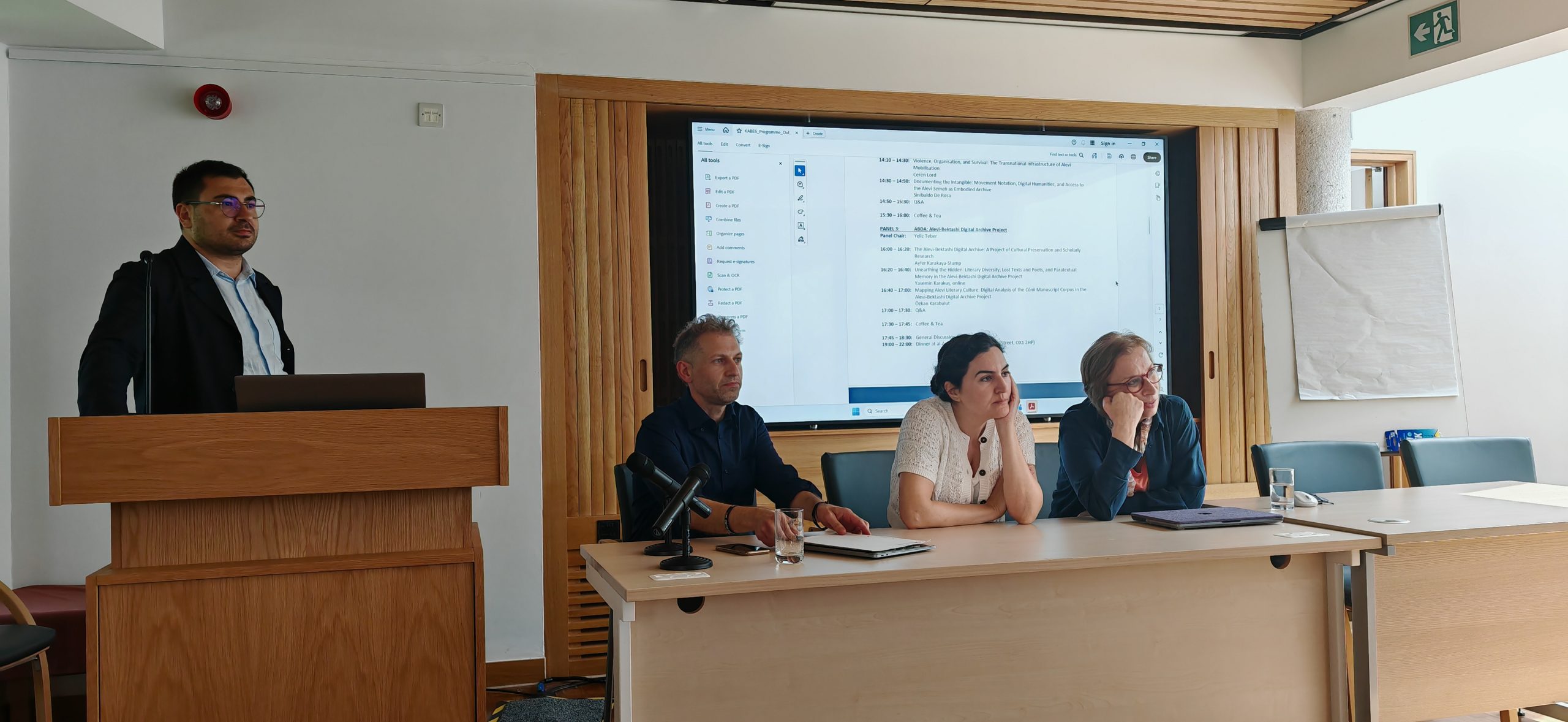
Event photograph, attributable to Hüsamettin Şimşir, Daniel Burt, Yeliz Teber, and Bedriye Poyraz, all rights reserved the respective holder (2026)
The first afternoon panel started with the presentations of Kumru Berfin Emre and Bedriye Poyraz, who offered important perspectives on the 1937-38 Dersim Massacre, combining survivor testimonies, mapped massacre sites, and visual archives to demonstrate the value of interdisciplinary approaches for recovering suppressed histories and cultural memory. Sinibaldo de Rosa showed how movement notation and digital humanities methodologies can transform Alevi ritual dance into a searchable and analysable embodied archive, contributing to approaches to documenting, preserving, and studying intangible cultural heritage.
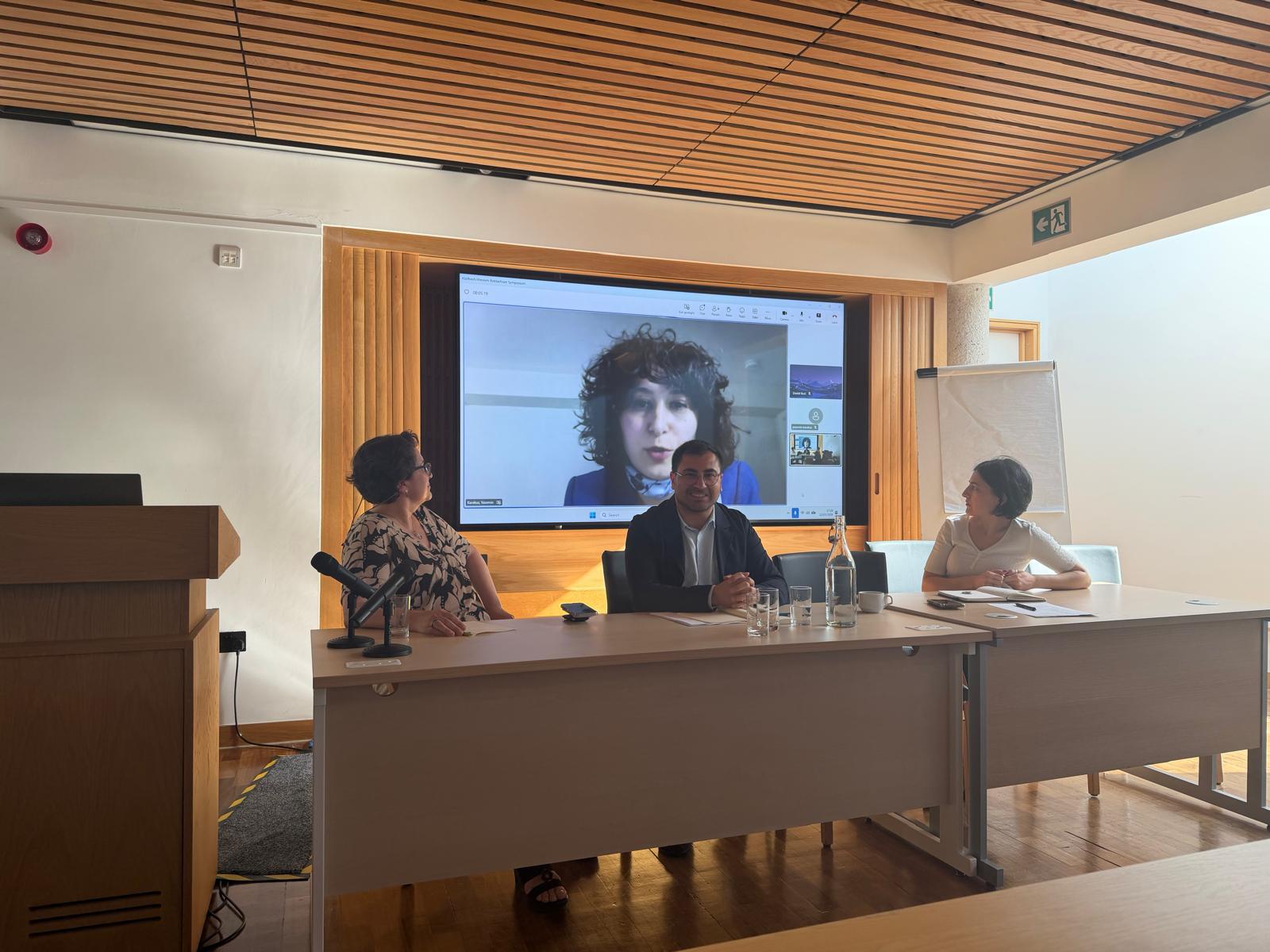
Event photograph, attributable to Hüsamettin Şimşir, Daniel Burt, Yeliz Teber, and Bedriye Poyraz, all rights reserved the respective holder (2026)
The final panel highlighted the work of the Alevi-Bektashi Digital Archive (ABDA) project, a major collaborative initiative under the principal investigation of Ayfer Karakaya-Stump, who first presented the archive’s efforts to preserve endangered manuscripts, oral histories, and audiovisual heritage through a publicly accessible digital repository. Yasemin Karakuş demonstrated how newly digitised manuscript collections in this corpus are transforming our understanding of Alevi-Bektashi literary culture through the recovery of previously unknown texts, poets, and paratextual materials. Finally, Özkan Karabulut showcased how digital corpus analysis and mapping of Alevi poetry collections are revealing new insights into the circulation of texts, canon formation, collective memory, and religious history. Together, the panel illustrated the transformative potential of digital humanities approaches for preserving and reinterpreting Alevi-Bektashi cultural heritage.
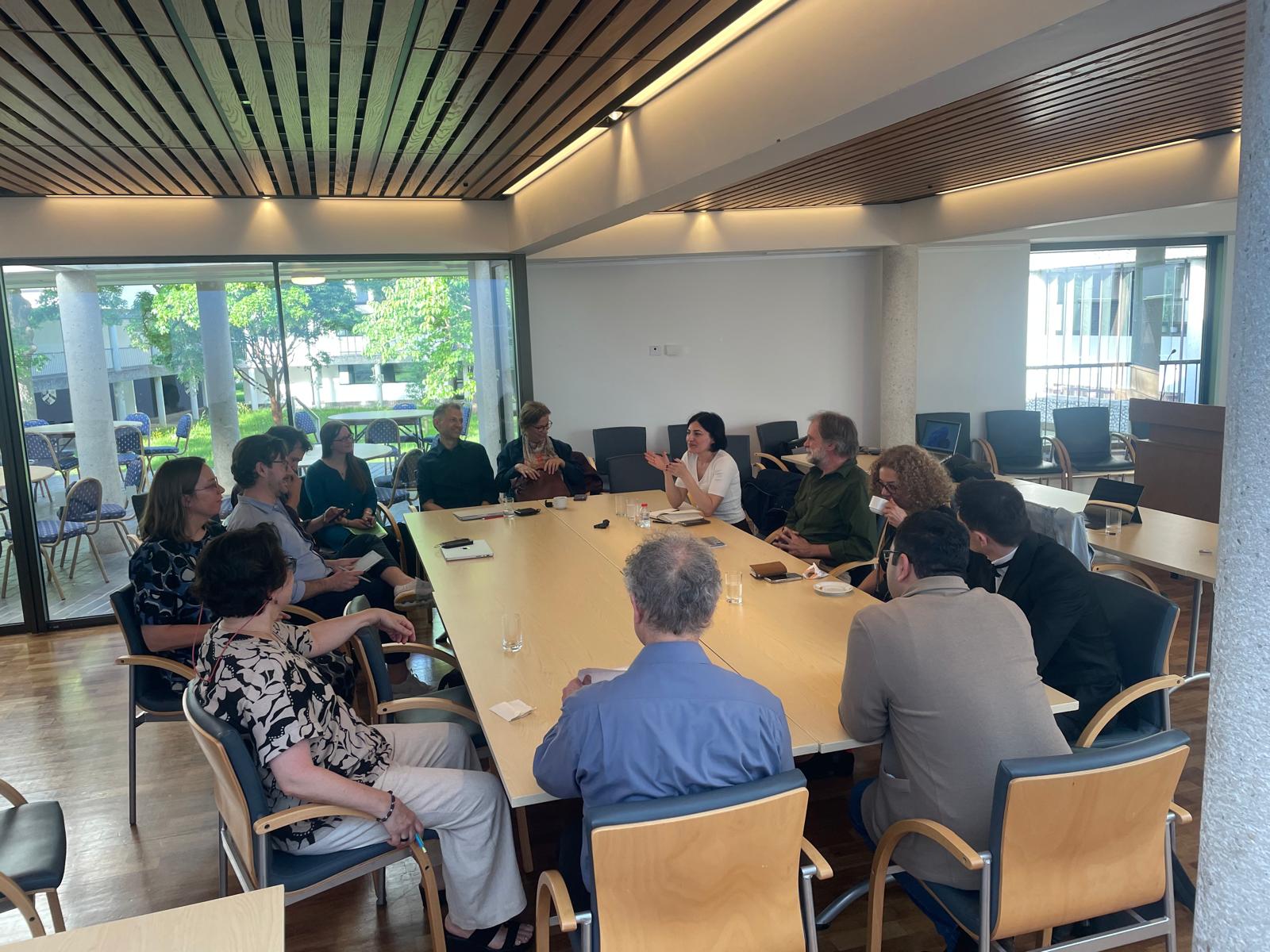
Event photograph, attributable to Hüsamettin Şimşir, Daniel Burt, Yeliz Teber, and Bedriye Poyraz, all rights reserved the respective holder (2026)
The event generated significant interest within and beyond the University of Oxford. Owing to exceptionally strong interest in the event, the number of registered audience members was increased from the originally planned 15 participants to 25 attendees (excluding speakers). This expanded audience included academics, graduate students, and independent researchers from a variety of disciplinary backgrounds, creating a vibrant environment for discussion and networking. The symposium fostered new connections between scholars working on related topics and encouraged interdisciplinary conversations that will support future collaborations and research initiatives.
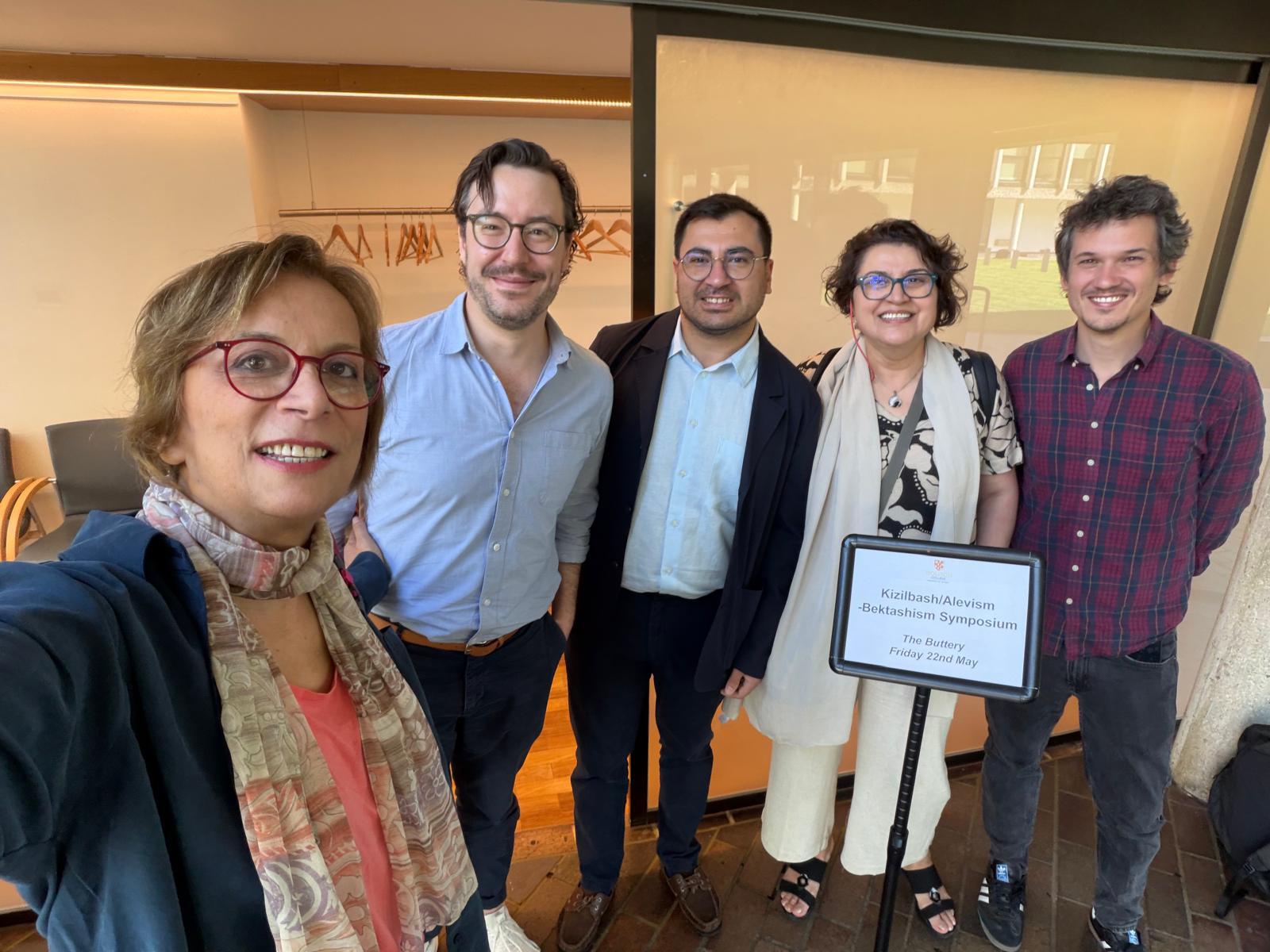
Event photograph, attributable to Hüsamettin Şimşir, Daniel Burt, Yeliz Teber, and Bedriye Poyraz, all rights reserved the respective holder (2026)
The generous support of the Past and Present Society was instrumental in enabling the successful delivery of this symposium. The funding helped create an inclusive and intellectually stimulating forum that enhanced the visibility of Kizilbash/Alevi-Bektashi studies within Oxford’s wider research community and beyond. The strong attendance, high-quality papers, and productive discussions demonstrated both the growing scholarly interest in the field and the value of supporting specialist forums that bring together researchers working on underrepresented histories, cultures, and communities. I am deeply grateful to the Past & Present Society for its generous support and for helping make this event possible.
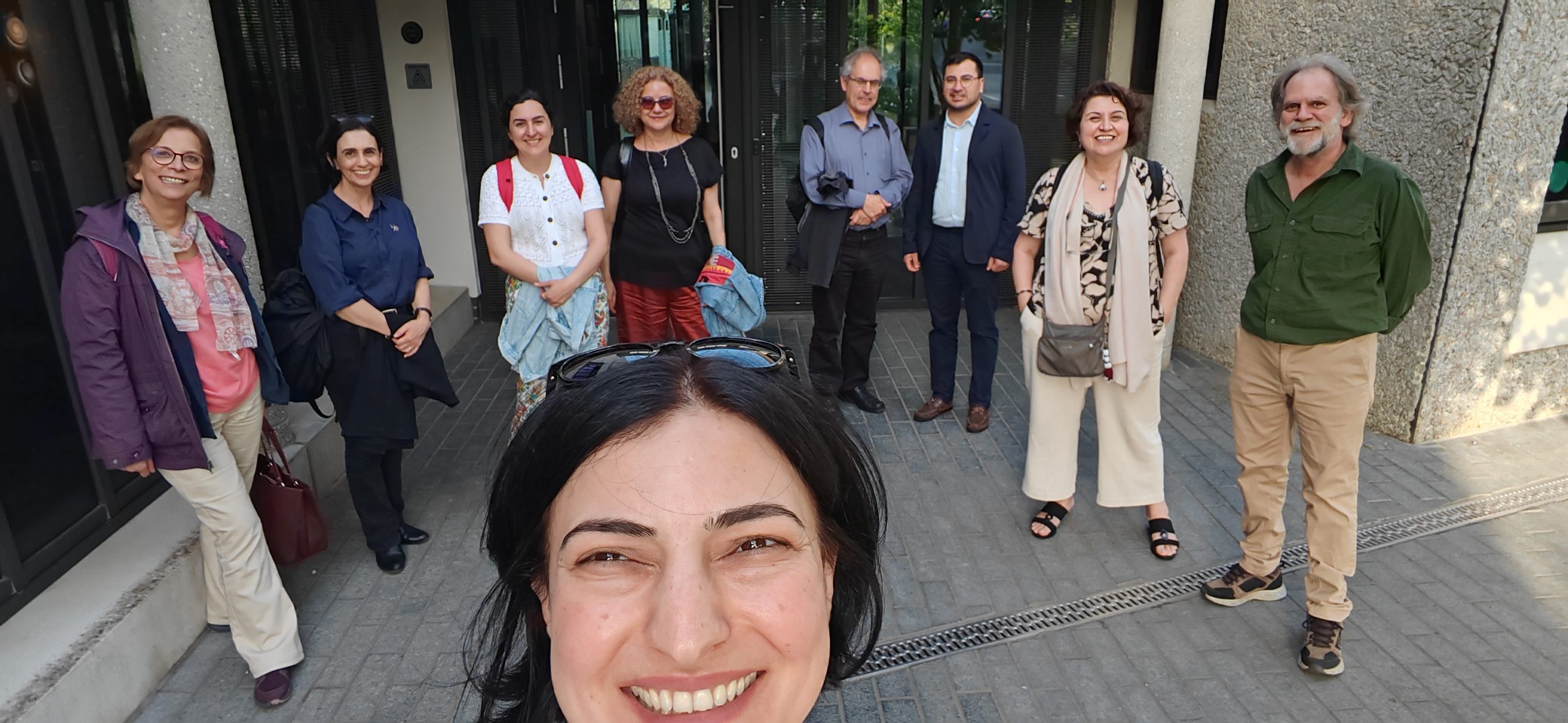
Event photograph, attributable to Hüsamettin Şimşir, Daniel Burt, Yeliz Teber, and Bedriye Poyraz, all rights reserved the respective holder (2026)
Past & Present logo, 2017 all rights reserved