

news and updates on the Past & Present Blog
BLOG
Reflections Upon "Poverty Dynamics in the Long Late Antiquity, 300 – 800 AD"
By Josh Allen - September 11, 2026 (0 comments)
by Ian Bonze (University of St. Andrews)
The two-day conference Poverty Dynamics in the Long Late Antiquity was organised by Professor Carlos Machado and Ian Bonze on 22–23 July 2026 at the School of Classics, University of St Andrews. Our event brought together 19 speakers on the late antique period, including early-career and established scholars, to discuss the impact of poverty drivers, broadly understood, on daily lives, cultural values, and power hierarchies. We advertised the conference on various social media platforms and mailing lists, which generated significant interest in attending. Given the high number of people registered to attend in person and the room’s limited capacity of 35 seats, we decided to make our event hybrid. This decision allowed 50 other people, from the UK and abroad, to register to attend our event online. Additionally, two of our speakers could not attend in person due to unforeseen circumstances and presented online.

Group photograph of conference participants, image supplied by the conference organisers, all rights reserved the image maker (2026)
The conference programme was divided into six thematic sections, in which speakers presented new approaches to understanding the role of poverty in late antique societies, followed by rounds of discussion. Over 2 days, our speakers delved into a variety of poverty drivers, such as divorce, health, food consumption, and debt, and the strategies poor individuals used to cope with these socio-economic pressures. We are very grateful for the financial support offered by Past and Present Society (along with co-funders, the School of Classics, the CUCD, and the ICS), which was used to cover the expenses of accommodation and transport for our speakers.

Conference participants participating in a tour, image by Ian Bonze, all rights reserved (2026)
Despite the plurality of themes and temporalities, our speakers had a few points in common: 1) Defining the poor and poverty is essential but not sufficient. The notion of “poor” can also be rhetorically constructed, as Dr James Palmer put it, “a cosplay of poverty”. In this sense, analysis across social groups shows that these categories cannot be separated. Not only church leaders, such as bishops, presbyters, and monks, talked about the poor; aristocrats and the state did so too. Late antique society spoke clearly about poverty, and this production of discourse is an expression of power, with a considerable impact on behaviours and hierarchies. 2) The power to identify and name the poor is a form of social classification; in other words, it is an intervention in social life, and regulating the lives of the poor remains a way of intervening in the broader social world. 3) The poor, no matter how we may identify or classify them, did not suffer passively. There was a concrete social dimension in which people living in poverty responded to socio-economic pressures in practical ways, such as begging, borrowing, running away to churches, or selling or pledging children. The poor were dynamic economic agents who also impacted society economically and socially. 4) The discussions called for more archaeological (bio and zoo) excavations that go beyond traditional priorities like buildings and focus more on people and their lived experiences. At the same time, it is necessary to revisit older excavations and written sources to reassess the issue of poverty. At the end of the conference, our speakers and attendees had a free tour around the town of St Andrews, generously given by Prof Alex Woolf of the School of Medieval History at the University of St Andrews.

Conference participants participating in a tour, image by Ian Bonze, all rights reserved (2026)
Given the success of this two-day conference, we are planning the publication of the proceedings. We are currently compiling titles and abstracts from our speakers and considering which publishers to approach. To that end, we are also consulting experts in the field. Our goal is to publish a book examining the social history of the late antique and early medieval world. Many dramatic events and processes marked these periods; we argue that they can be reviewed and reframed, particularly when we consider quotidian dimensions, such as the lives of the poor.
A Historical Episode of Job-Destroying Technology: Technological Unemployment in the British Industrial Revolution
By Josh Allen - July 14, 2026 (0 comments)
by Dr. Ben Schneider (University of Cambridge)
The fear that new technologies will cause mass unemployment appears during every wave of transformative innovation. Despite the recurrence of these discussions, including in ongoing debates about the effects of AI, many economists and economic historians, including the Nobel laureate Joel Mokyr, doubt that technology has ever caused large-scale job losses and long-term unemployment. They argue, for example, that similar narratives appeared in the 1960s without an obvious rise in the unemployment rate of rich countries. Moreover, while the Industrial Revolution is commonly mentioned as an instance of technological disruption, there is little quantitative evidence for unemployment caused by new technologies, referred to as “technological unemployment”.
These optimistic views are misleading. “In Technological Unemployment in the British Industrial Revolution: The Destruction of Hand-Spinning” my article in Past & Present no. 270, I systematically analyze job loss and subsequent unemployment in part of the British textile industry during the Industrial Revolution. In the space of a few decades beginning around 1770, new textile machines replaced work that had employed 8% of the British population. There was insufficient new work available in the growing factory districts to replace the lost jobs, and widespread unemployment and underemployment continued into at least the 1830s. This is the largest example of technological unemployment yet examined.
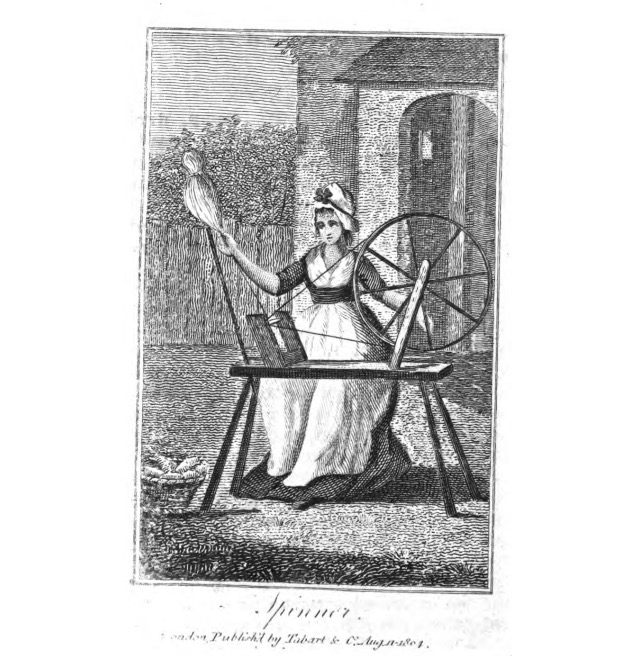
R. Phillips, The book of English trades, and library of the useful arts (London, 1818), 362. public domain, via Internet Archive, Wiki:Commons
Before the Industrial Revolution, spinning wool, cotton, or flax into yarn on a spinning wheel (hand spinning) was a major source of employment for women. Research by Craig Muldrew suggested that perhaps 10% of the population of England was employed in spinning by 1770; my more conservative estimate for Britain as a whole is 8%, or about 700,000 workers. Using either estimate, spinning was probably the largest employment outside of agriculture. It was also flexible work that women could fit around other labor, including seasonal farm work. Combining different types of work for multiple employers was common before the rise of regular full-time employment for one company. Spinning provided important income overall and could be the only option in parts of the year when there was no other work available.
New technologies transformed spinning and enabled much greater output per worker. The spinning machines, which were initially hand-driven, were soon powered by water wheels (from c. 1770) and later steam engines in factories, which greatly increased production and outcompeted the hand spinners. Hand spinners were first replaced in cotton spinning, which was the easiest to mechanize, and later in spinning wool and flax.
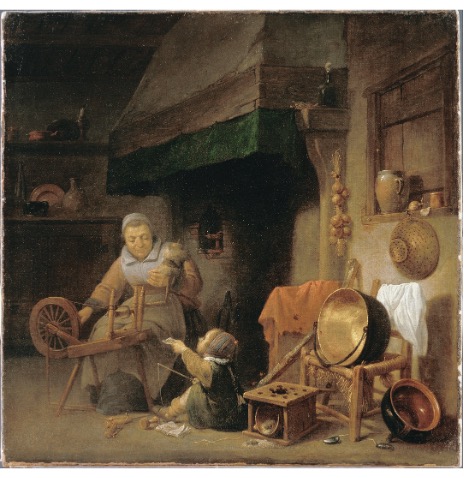
Pieter Nys, Woman Spinning, 1652, public domain, via Google Art Project and Wiki:Commons

Workers and their families were concerned that the new machines were taking their jobs, and they attacked and destroyed some spinning machines in the 1770s. Written complaints about the job-replacing effects of spinning machinery began to appear soon afterwards. One 1780 booklet proposed that the machines should be taxed because they were replacing workers, which may be the first example of an automation tax.
The main challenge of analyzing, and particularly quantifying, technological unemployment in this period is that there are no national unemployment statistics. Instead, I analyze more than 200 qualitative sources that provide evidence about the availability of work for women, which types of work were available, and discuss job losses caused by the new technologies. The most important sources are the surveys of social commentators around 1770 and in 1797, and responses by individual parishes to a survey by the 1834 Commission on the Poor Law.
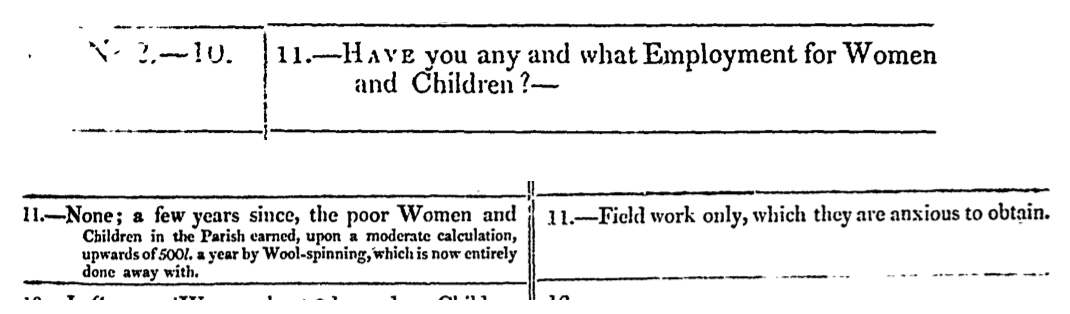
Report of the Poor Law Commissioners, page 461a (Laxfield and Livermere, Suffolk), image supplied by Dr. Ben Schneider
The first of these larger-scale sources is a set of books written by the agriculturalist and social commentator Arthur Young around 1770, describing observations of his three journeys around England and reports from his correspondents. At this point, employment was widely available for women, and spinning was reported in more than half of the locations for which Young provided information. In 1797, the social commentator Frederick Eden produced a three-volume analysis of the conditions of the poor, which also included information from specific locations about the availability of work, albeit for fewer places than Young had provided. At the end of the 18th century, Eden only found a handful of places with little work or seasonal work.
By the 1830s, factory spinning had entirely taken over, and the results were plain in the parish responses to the Poor Law Commissioners. Of the 1563 parishes that replied to the survey, 34% of them reported that there was little or irregular work for women, and a partly overlapping 19% stated that work was seasonal. In 14% of parishes there was no work for women. The loss of spinning employment was specifically mentioned, unprompted, by a number of parishes, and other qualitative sources that I examine in the article similarly pointed to the new technologies as the source of unemployment and deprivation.
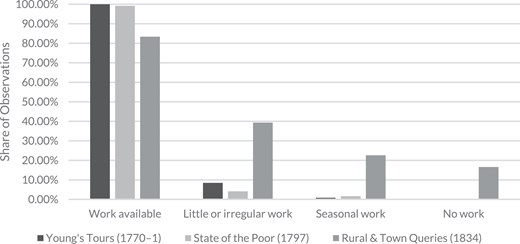
FIGURE 6 employment for women in england and wales, 1770–1834* * Note: This Figure excludes non-responses. * Sources: Derived from Tables 1, 3, 5 and A12 and the sources there. From Benjamin Schneider, “Technological Unemployment in the British Industrial Revolution: The Destruction of Hand-Spinning”, Past & Present no. 270 (2026) all rights reserved
I also match locations that were surveyed by Arthur Young and replied to the Poor Law Commissioners. This exercise allows us to see what happened in the same locations between c. 1770 and the 1830s. Work was available in all of these locations before the rise of factory spinning (there was little or irregular work in only one place), and spinning itself occurred in more than 40% of these places. By the 1830s, spinning was not reported in any of the same locations. As a result, half of them reported only little or irregular work for women, and more than 20% reported that work was seasonal. This pattern clearly matches the organization of women’s employment in this period. Few women had a single source of income, much less a formal occupation, so technological replacement of workers appears as a mixture of complete unemployment and widespread underemployment. Since women had particularly tended their spinning wheels when no agricultural work was available, when spinning disappeared, women would be left unemployed in seasons without farm labor. The parishes that replied to the Poor Law Commissioners document these developments.
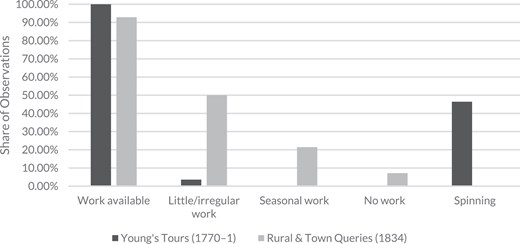
FIGURE 8 employment for women in matched parishes, 1770–1771 and 1834* * Sources: Young’s Tours (see n. 71); Royal Commission of Inquiry into Administration and Practical Operation of Poor Laws: Report, Index, Appendix, Parliamentary Papers, 1834 (44), xxxvii. From Benjamin Schneider, “Technological Unemployment in the British Industrial Revolution: The Destruction of Hand-Spinning”, Past & Present no. 270 (2026) all rights reserved
The absence of a labor force survey, which is used to construct current-day unemployment data, means it is not possible to say exactly how many women were replaced and left unemployed by industrial technologies. The historical sources only allow us to estimate the number of spinners before and after industrialization, and they report whether work was available in a specific place and the types of work available. However, the factory jobs created directly by new technologies employed a far smaller share of the British population (less than 1%) in the 1851 Census, and more than half of this group were men and boys. In 1770, 8% of the population (nearly all women and some children) had been employed in spinning. Therefore, about 7.5% of the population would have needed to find new types of work. While part of this group surely found work in sectors of the economy outside the new textile factories, reports of widespread unemployment and underemployment into at least the 1830s show that new technologies produced extensive employment loss.
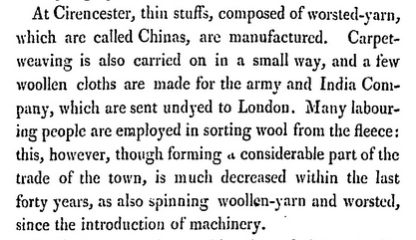
Rudge, “General view of the agriculture of the county of Gloucester” (1807), 341, image supplied by Dr. Ben Schneider
The replacement of such a large source of work for women and the lack of new opportunities may have contributed to women’s marginalization from paid work in the 19th century and the rise of the male breadwinner family. It was likely also an important reason that women’s paid employment in Britain did not return to pre-industrial levels until the 1980s.
This example is atypical in two important ways: spinning employed a large share of the British workforce in the late 1700s and the productivity advances were astonishing, increasing more than 100 times between 1760 and 1830. While most new technologies have not caused this scale of disruption, in ongoing work my colleague Jonathan Jayes and I have found other notable examples of job-replacing technology, some of which produced long-term unemployment.
The unemployment of hand spinners has been discussed by gender historians because most of the workers were women, although without systematic quantification. It has been ignored by most of economic history, and it does not appear in common economics and policy narratives about technology and work, even in those that mention history. Why has such a dramatic shift escaped attention? I suggest three main explanations. First, women’s employment in the past has been downplayed and underestimated, partly because it was organized differently from men’s work, featuring a wider array of different employments or jobs, meaning there is less surviving documentation. As a result, the loss of women’s employment could be seen as a minor episode. Second, some scholars have asserted that women voluntarily left paid work during the Industrial Revolution because they preferred housework or leisure. The scarcity of quantitative records is also part of the third explanation: there has not been a previous attempt to measure this job loss and unemployment, probably because economic historians have not considered the possibility of using qualitative sources in a systematic fashion. The lack of existing statistics meant that the unemployment of hand spinners was marginalized by quantitative economic history despite the mass of qualitative evidence.
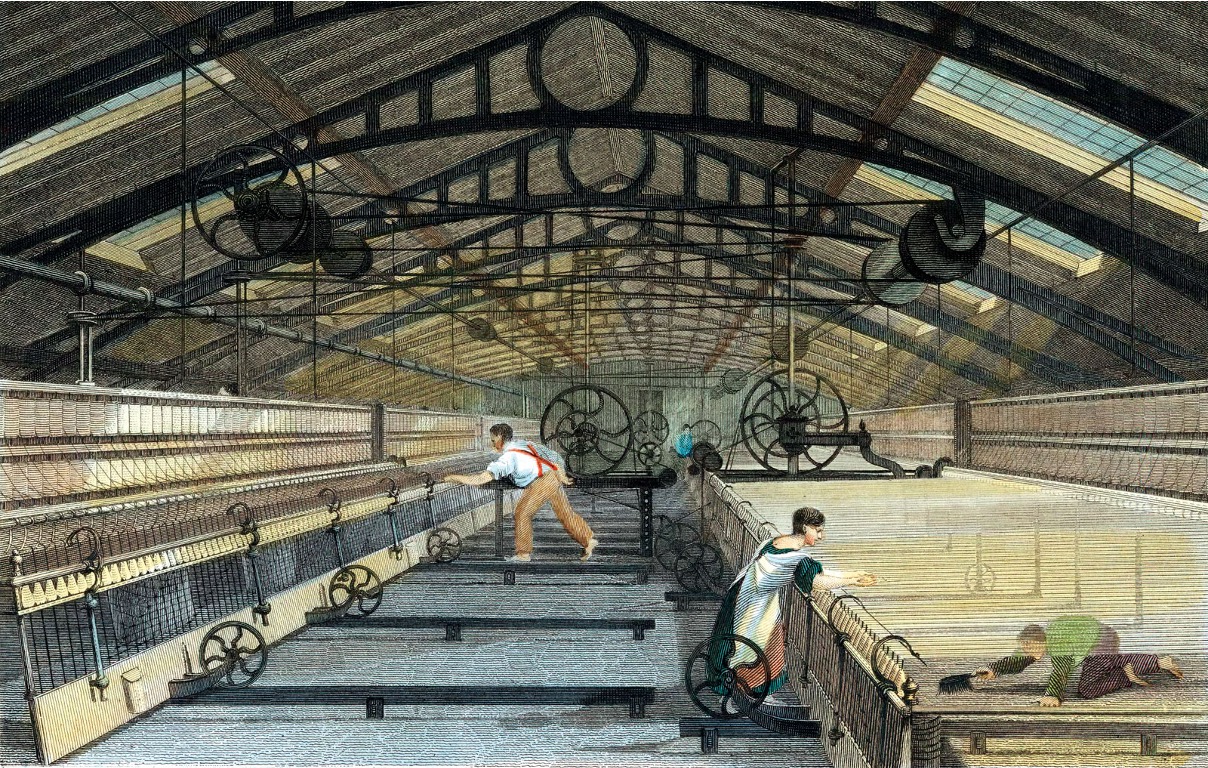
Colorized image of a mule spinning factory from Baines, History of the Cotton Manufacture of Great Britain (London, 1835), 211., public domain via Wellcome Collection
While many commentators discussing the possible changes to work caused by AI and automation suggest that technology has only caused minor, short-lived disruptions in the past, this episode demonstrates that mass job loss and long-run deprivation has followed dramatic technological change. The unemployment of hand spinners is a cautionary tale for the future of employment.
Past & Present Author Gianamar Giovannetti-Singh Wins 2026 RHS Early Career Article Prize
By Josh Allen - July 6, 2026 (0 comments)
by the Past & Present editorial team
We were delighted to learn that Dr. Gianamar Giovannetti-Singh (University of Amsterdam) has won the Royal Historical Society’s Early Career Article Prize 2026 for his article “Colonial world-making and global knowledges at the early modern Cape of Good Hope” (Open Access) which was published in Past & Present no. 268 (August 2025).
Awarded annually, the RHS Early Career Article Prize (known between 1898 and 2025 as the Alexander Prize) is for an essay or article based on original historical research, by a doctoral candidate or an early career historian within three years of being awarded a doctorate, published in a journal or an edited collection of essays.
Two prizes of £250 each are awarded annually.
In their citation the judging panel chaired by Dr Jesús Sanjurjo stated that:
“The panel is delighted to award the 2026 Early Career Article Prize to Gianamar Giovannetti-Singh for his brilliant article, ‘Colonial World-Making and Global Knowledges at the Early Modern Cape of Good Hope’.
Gianamar presents a sweeping, transoceanic history that fundamentally challenges our understanding of early modern geography and knowledge production. By seamlessly weaving together the ambitions of the Dutch East India Company, the astronomical diplomacy of French Jesuits, and the anticolonial resistance of the Indigenous Khoekhoe, the author vividly demonstrates how the Cape was actively reimagined as an extension of the East Indies. The article stands out for its staggering intellectual ambition, its rich source base, and its masterful execution of global history.”
Our congratulations to Dr. Giovannetti-Singh on his scholarship being recognised in this fashion.
The other winner of the 2026 prize was Dr. Stephanie Wanga for her article ‘Rereading Ujamaa, rethinking freedom’, in Development and Change. A full list of those shortlisted for the 2026 prize can be found here. Congratulations to Dr. Wanga and those on the shortlist, also.
Past & Present logo, 2017 all rights reserved
"Medicine, Race, and Slavery in the Transatlantic World, 1600–1850" Past & Present Supplement No. 18
By Josh Allen - June 26, 2026 (0 comments)
by the Past & Present editorial team
Edited by Dr. Hannah Murphy (King’s College London) the 18th Suppmentary issue of Past & Present “Medicine, Race, and Slavery in the Transatlantic World, 1600–1850” comprising 12 articles has now been published.
The suppment’s abstract explains the volume illustrates that:
“The histories of medicine, transatlantic slavery, and race cannot, and should not, be viewed separately. Between 1440 and 1888 more than twelve million African people were forcibly trafficked across the Atlantic Ocean, enslaved in plantations, cities, and homes across the Americas, the Caribbean, and Europe. As emerging discourses on anatomy, physiology, and disease claimed new authority over explanations for human difference, the same period gave rise to medicalized concepts of ‘race’.
Bringing these developments into a single analytical frame, this Supplement offers a wide-ranging set of case studies spanning Italy, Spain, the Canary Islands, the British and French Caribbeans, Britain, North America, Ethiopia, and the kingdoms and territories of the west coast of Africa. Ranging from the seventeenth to the mid-nineteenth centuries, the contributions draw on diverse archival materials, including inquisitorial trials, port inspections, medical case histories and treatises on disease, missionary correspondence, travel narratives, legal records, newspaper accounts, and first-person testimonies. Foregrounding a broad cast of historical actors – physicians and surgeons, colonial practitioners, metropolitan intellectuals, enslaved women and indigenous healers – the volume traces professional practices, experiences of disease, and the lives of patients, from Canarian nobles to enslaved galley workers. In addressing medical practices within structures of slavery, genealogies of race-medicine, and how the politics of health and healing were themselves racialized, the articles here collectively demonstrate that a critical approach to the role of medicine offers a fresh narrative perspective to the histories of slavery, and a new understanding of the problems of race.”
All of the supplement is currently free to read and a couple of articles are open access.
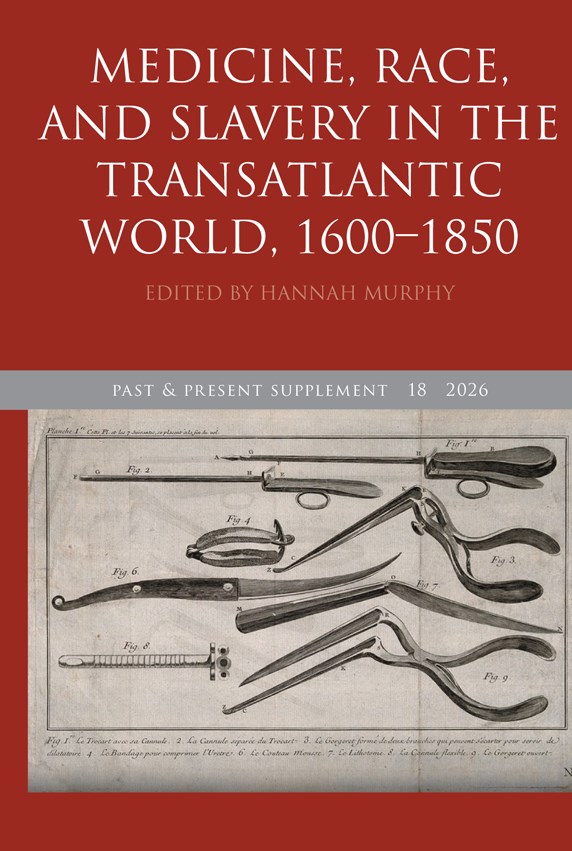
Cover of “Medicine, Race, and Slavery in the Transatlantic World, 1600–1850”, Past & Present Supplement No. 18 (2026)
Reflections Upon "Speech/less in the Early Modern World"
By Josh Allen - June 23, 2026 (0 comments)
by Dr. Olivia Formby (Emmanuel College, University of Cambridge)
Rational speech was hailed by early modern Europeans as the clearest outward sign of reason: the capacity that set humans above all other animals. Yet speechlessness was a common part of early modern life. All human infants were born without speech and, throughout the life cycle, speech could be impeded or even silenced, temporarily or permanently. ‘Speech/less in the Early Modern World’ research workshop (23-24 April 2026) aimed to interrogate the ways that the articulation of rational speech continues to be privileged by modern scholars as the best evidence for humanness, reason, and even emotion.
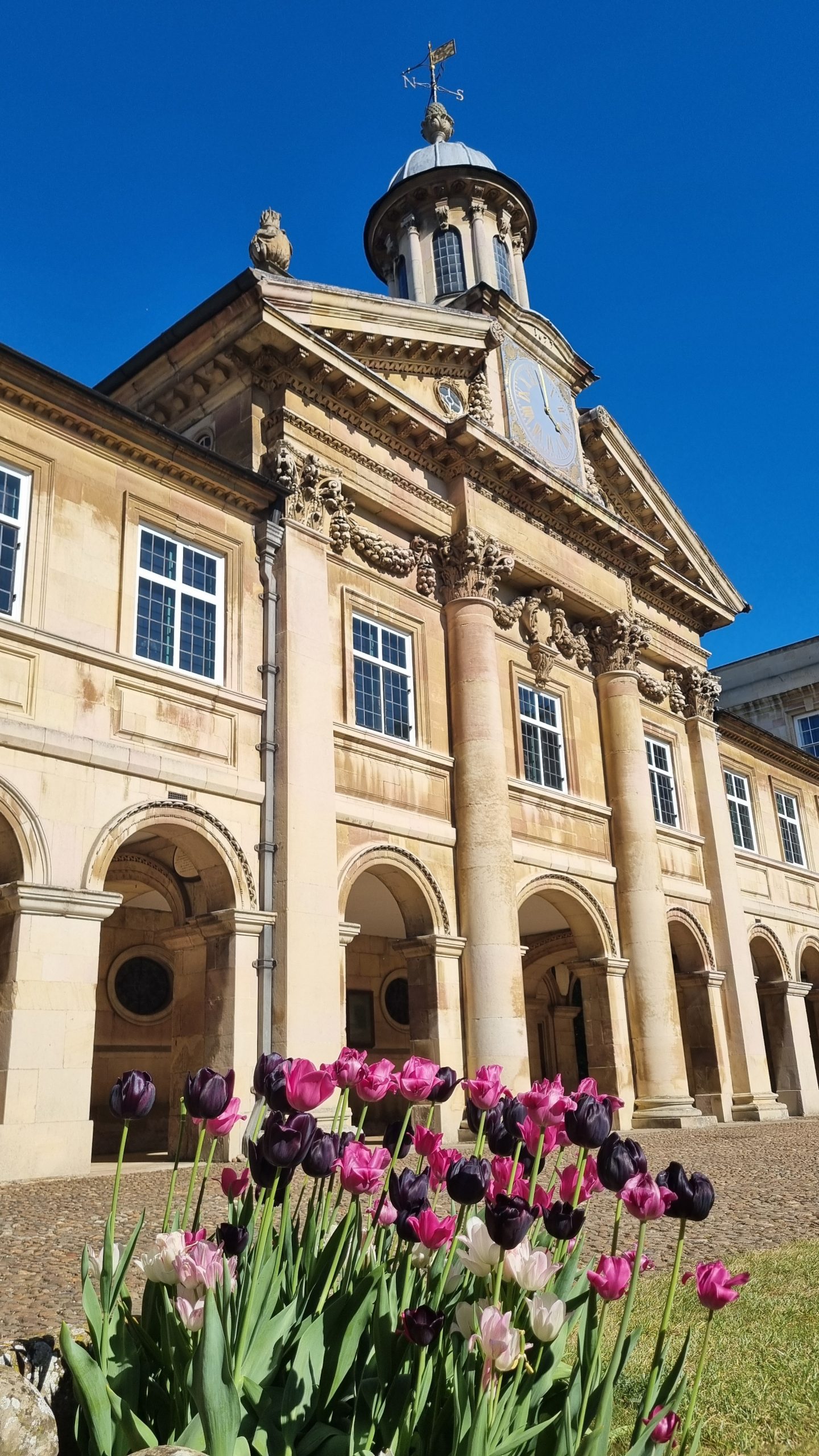
Photograph of the front of Emmanuel College, Cambridge, by Olivia Formby, all rights reserved (2026)
We gathered at Emmanuel College, University of Cambridge, to share new research that explores the multiple meanings and diverse lived experiences of speechlessness in the early modern world (c.1450-1830). Contributors and chairs were drawn from all career stages and represented institutions across the UK, Europe, Canada, and Australia. Spurred on by gorgeous spring weather, the workshop was a convivial environment for interdisciplinary discussion about voice, the body, and personhood in early modernity.
Across six panels, we explored how people of the past experienced varying degrees of speechlessness due to illness or disability, enslavement, migration, spiritual events, or dramatic performance. These early modern experiences were often difficult and even distressing. Lack of articulate speech generated ambiguity, both in the meanings which an individual could convey to others, and in the status of speechless people in their communities. Speech was often most critical at moments in early modern life when religious and legal personhood was at stake, such as when deaf children approached the sacrament of confirmation or a dying man lost his speech before the making of his will. Yet contributors were also attentive to the nuances of these ambiguous experiences and highlighted the ways that speechlessness was effectively navigated by individuals, families, and communities. People without speech – from young slaves to the prelingually deaf to the bewitched – often employed alternative written, sounded, and gesture-based means of communication, with purpose and agency.
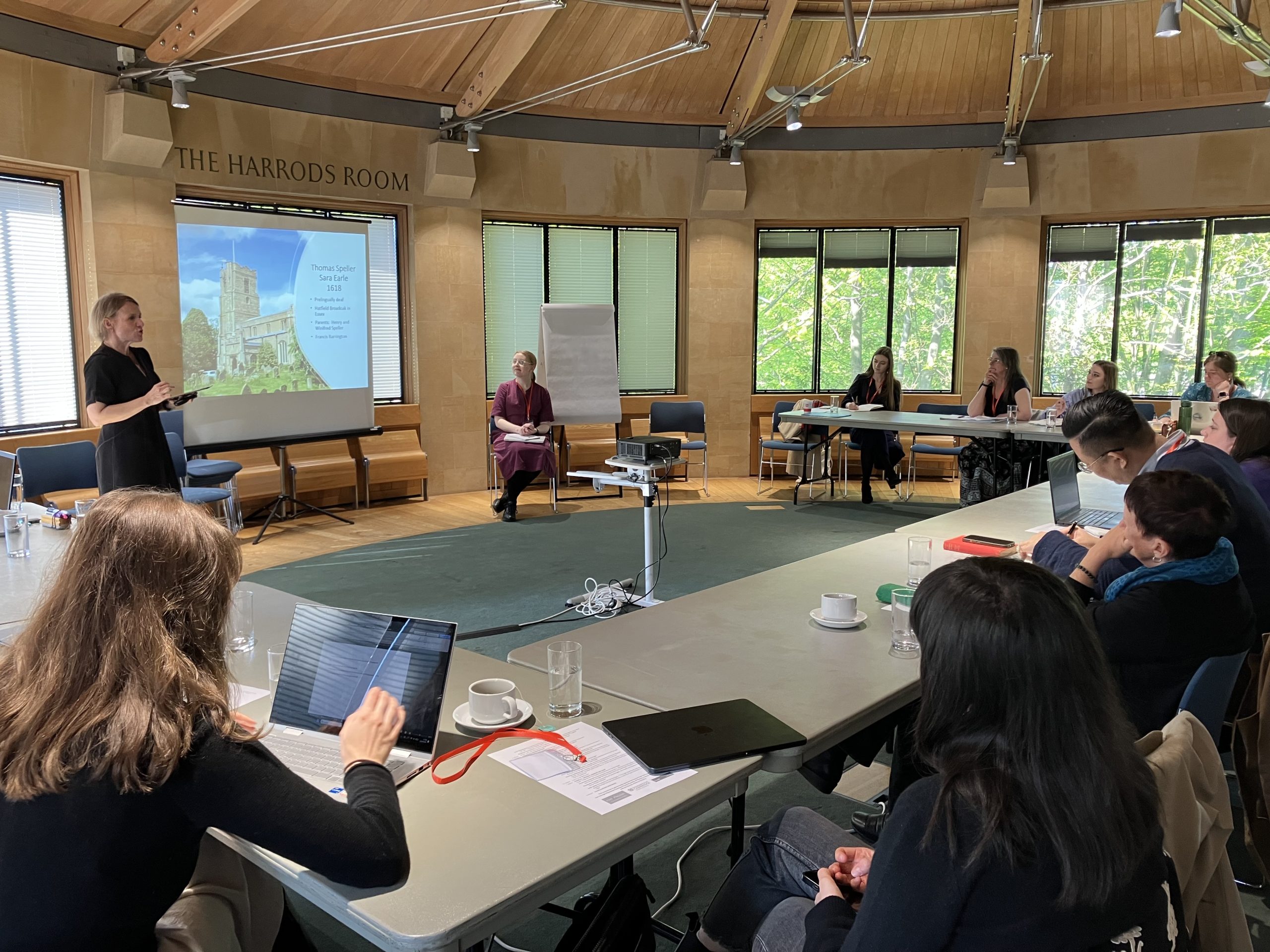
Photograph of a session during “Speech/less” on 23-24 April 2026, by Mary Whittingdale, all rights reserved (2026)
A common thread throughout the papers was the dynamic relationship between speech and the body. Early modern people looked to the speechless body for signs of reason and understanding, and for clues about whether speech might be restored. Our discussion of the changeability and ageing of the body revealed that speechlessness was not at all clear cut. Speech could sometimes return, by miraculous or ordinary means. A person could be deemed speechless in a medical context, even when they could produce certain word sounds. In a legal context, a non-speaking deaf person could be declared fit for marriage, as long as their gestures indicated their capacity for understanding. The interpretation of non-verbal gestures and sounds was highly dependent on the relationships and settings in which speechlessness was expressed.
Professor Rosamund Oates (Manchester Metropolitan University) delivered a magnificent keynote on ‘Silent Histories: Deafness, Speech and Consent in Early Modern England’. Professor Oates expertly drew out these issues of speechlessness and personhood, gesture and the body, using vivid examples of the lived experiences of deafness drawn from her groundbreaking work on deafness in early modern England. This was an especially fruitful keynote given the number of young scholars in the room also working on deafness and other disabilities.
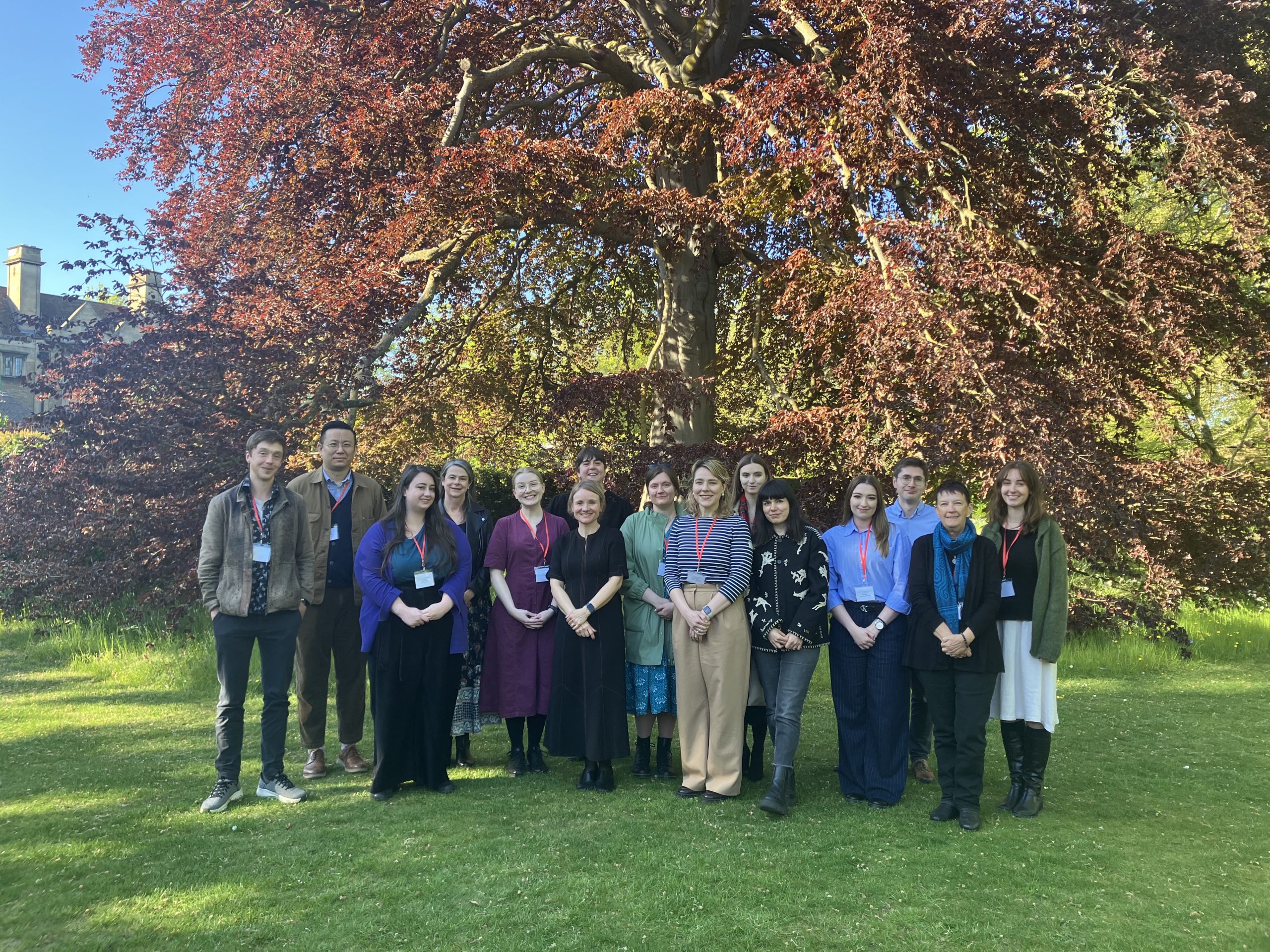
Photograph of a group of attendees at “Speech/less” on 23-24 April 2026, by Mary Whittingdale, all rights reserved (2026)
‘Speech/less in the Early Modern World’ sets early modern histories of the lifecycle, religion, and emotion in new directions, by revealing how speechlessness tested the limits of early modern thinking about what it meant to be a person in one’s community and by finding such limits to be very malleable indeed. The organiser is pursuing avenues for publication of an edited collection of essays.
I thank the Past and Present Society for their generous funding of this research workshop (along with co-funders, the Social History Society and the Faculty of History, Cambridge), which made it possible to fund travel bursaries for postgraduate and early career researchers and to allow free registration.
Past & Present logo, 2017 all rights reserved